Robert Land Academy:
The Retention Problem
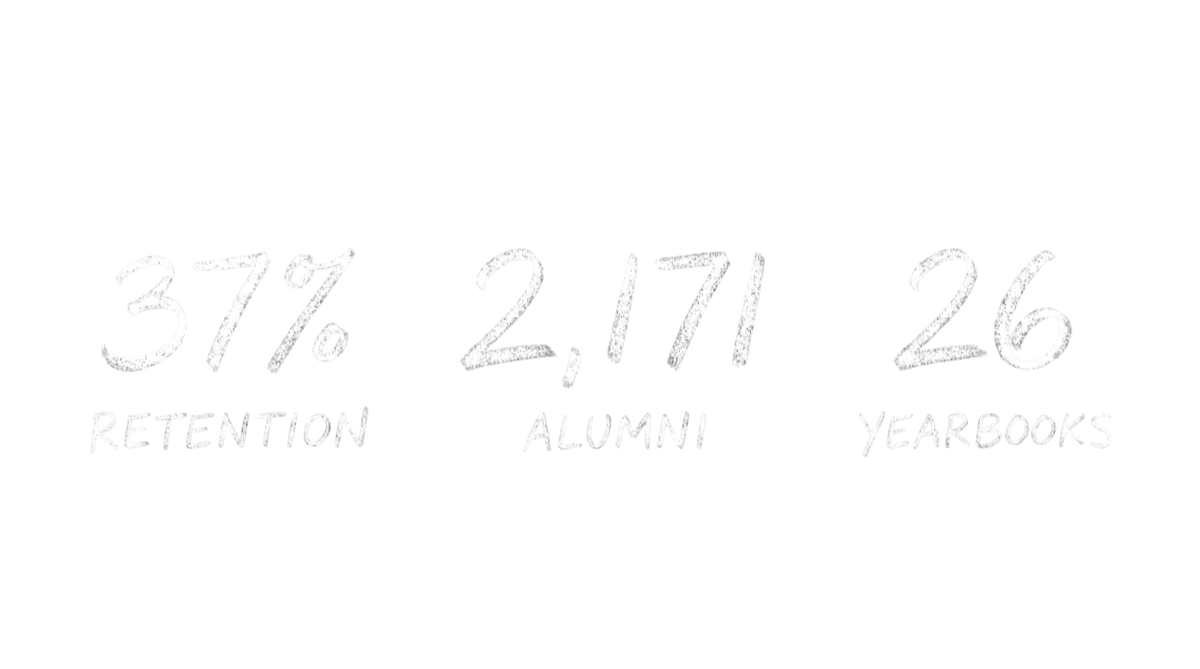
2,171 names tracked across 26 yearbooks, 1978–2011.
On average, roughly two out of every three students did not reappear in the following year’s roster.
In your experience running businesses, is there a model where 63% annual turnover is normal — or does a number like this usually signal something about the product itself?
Each dot below is one year-to-year transition. The dashed line is the 30-year average. The grey bands are gaps in our yearbook collection.
Year-to-year departure rate — 21 consecutive yearbook pairs, 1981–2011
The rate doesn’t appear to respond to leadership changes, enrollment size, or decade. Our yearbooks cover several clear RLA staff transitions. We suspect this holds even after Scott Bowman’s departure. You may be able to confirm.
Here’s a working thesis:
Two-thirds of students leave after one year. They don’t form peer bonds that create a real alumni network. A kid who arrives in September and leaves by June has no reunion group. He is part of a group that left as soon as they could.
The churn rate we are seeing describes an enrollment pattern and indicates a customer retention problem. It may be the case that the Facebook groups, which act as ad hoc alumni hubs, reflect this, too.
You stayed multiple years — you’re in the 39%. When you think about the guys who were there for a year and then disappeared, do you stay in touch with many of them?